DeepSkyLog connects your imaging plans with your whole FITS collection and new NINA captures. Track what each target still needs, check imaging windows and weather at your locations, and plan the next session with your progress in view.
Import metadata, not your original images. Your FITS files stay on your own storage - DeepSkyLog doesn't replace your backups.
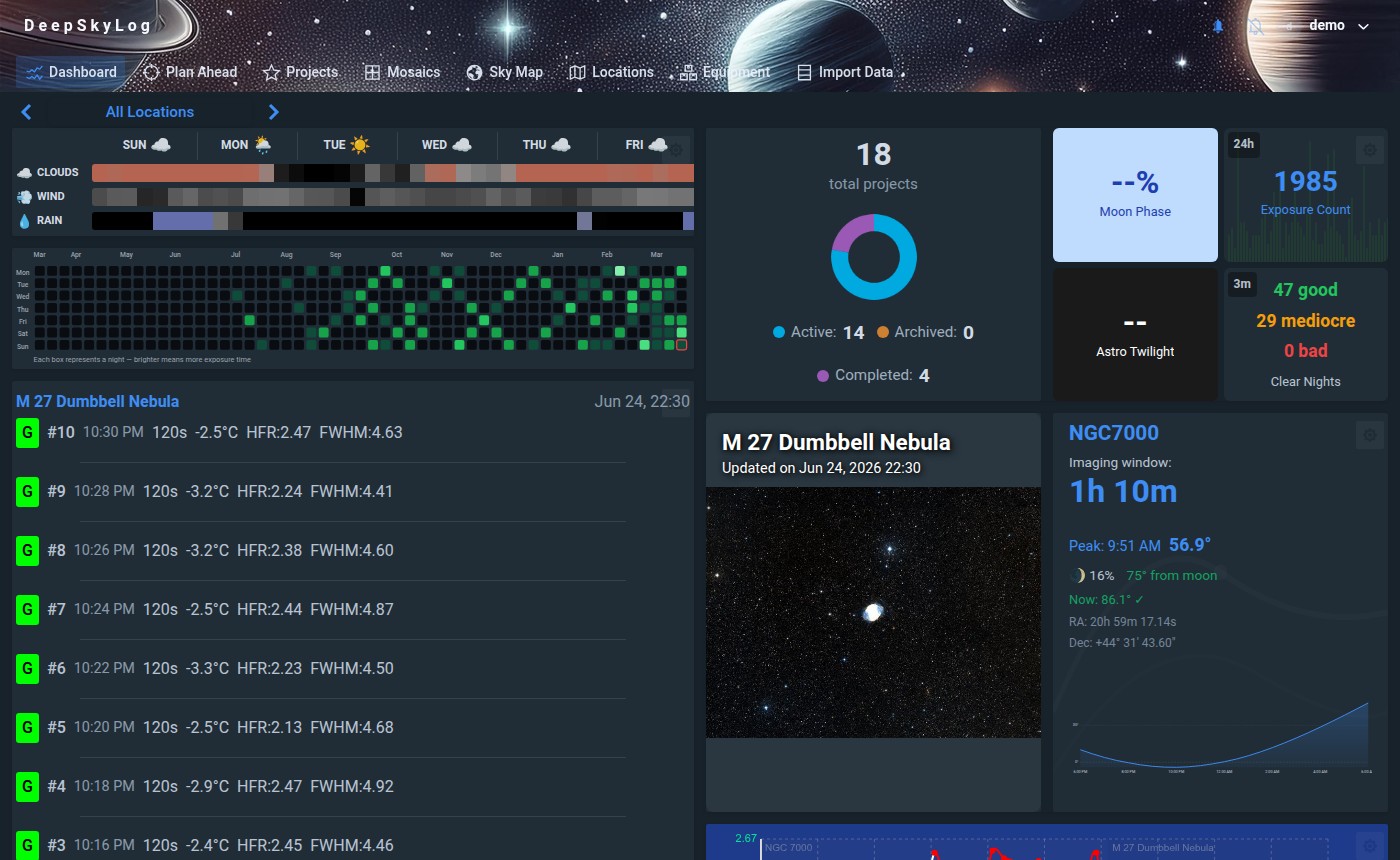
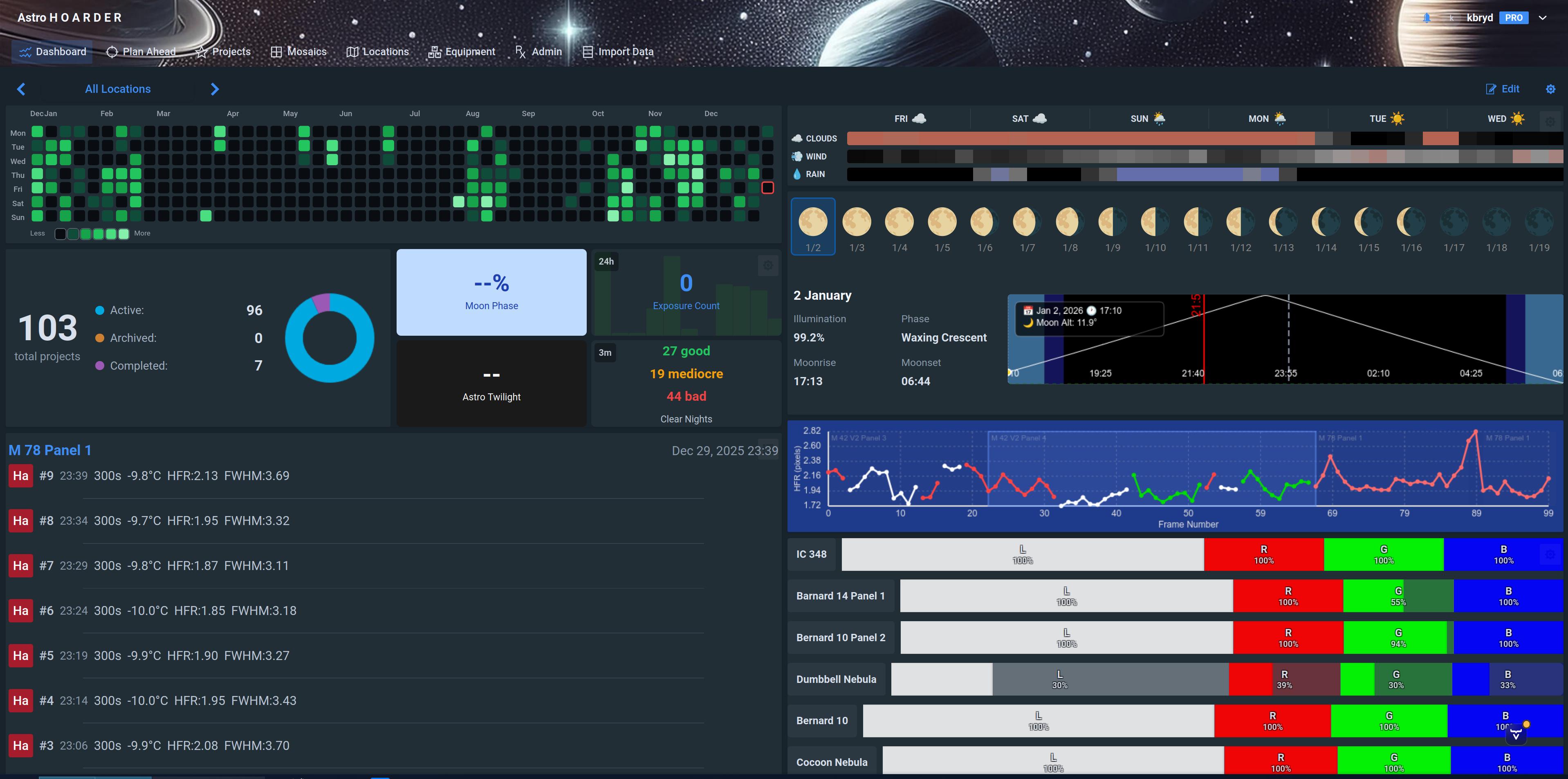
Your dashboard at a glance: project and exposure totals, the week's forecast, moon phase, and recent session quality. Full-size image
Not just for NINA. Import FITS collections from AsiAir, KStars / Ekos, Voyager, NINA, and other acquisition tools.
Two ways in
Start with your archive, or your next clear night.
You don't need to change your capture software, or wait for another session to get something useful out of DeepSkyLog.
The collection you already have
Import your FITS collection
Batch-import metadata from existing folders using the command-line importer or the Windows app. Bring years of captures into your planning, whatever software you used to take them.
CLI downloads for Windows, Linux, and macOS (Apple Silicon).
A Windows app if you prefer selecting folders and files in a window.
See which targets and filters still need time, with equipment and location attached.
The Windows and Apple apps aren’t code-signed yet. Windows may require extra steps to run it. Read the installation note.
New captures as they happen
Connect your NINA sessions
Use the NINA plugin to send frame metadata automatically during a sequence. Keep project totals up to date, so your next plan starts with what you actually captured.
Add new captures to your imaging record as they arrive.
Follow available guiding, focusing, and equipment telemetry.
Check on the rig from the sofa, or review the session the next morning.
Already have a NINA archive? Use either importer for your older FITS files, too.
Before you start: web imports are free; CLI imports, the Windows app, and NINA integration are paid. Compare plans.
Plan, capture, review
A few questions your folders can't answer.
01
What should I capture next?
Check target imaging windows and weather forecasts for your observing locations, then compare the opportunities with your unfinished projects. Plan around both the sky and the data you already have.
Compare exposure across nights and filters with your integration goals. For a mosaic, look at each panel; for a shared project, see what the other contributors have added before collecting more.
Review the frame metrics you recorded, look for changes in star size or guiding, and decide which part of the night deserves a closer look before processing.
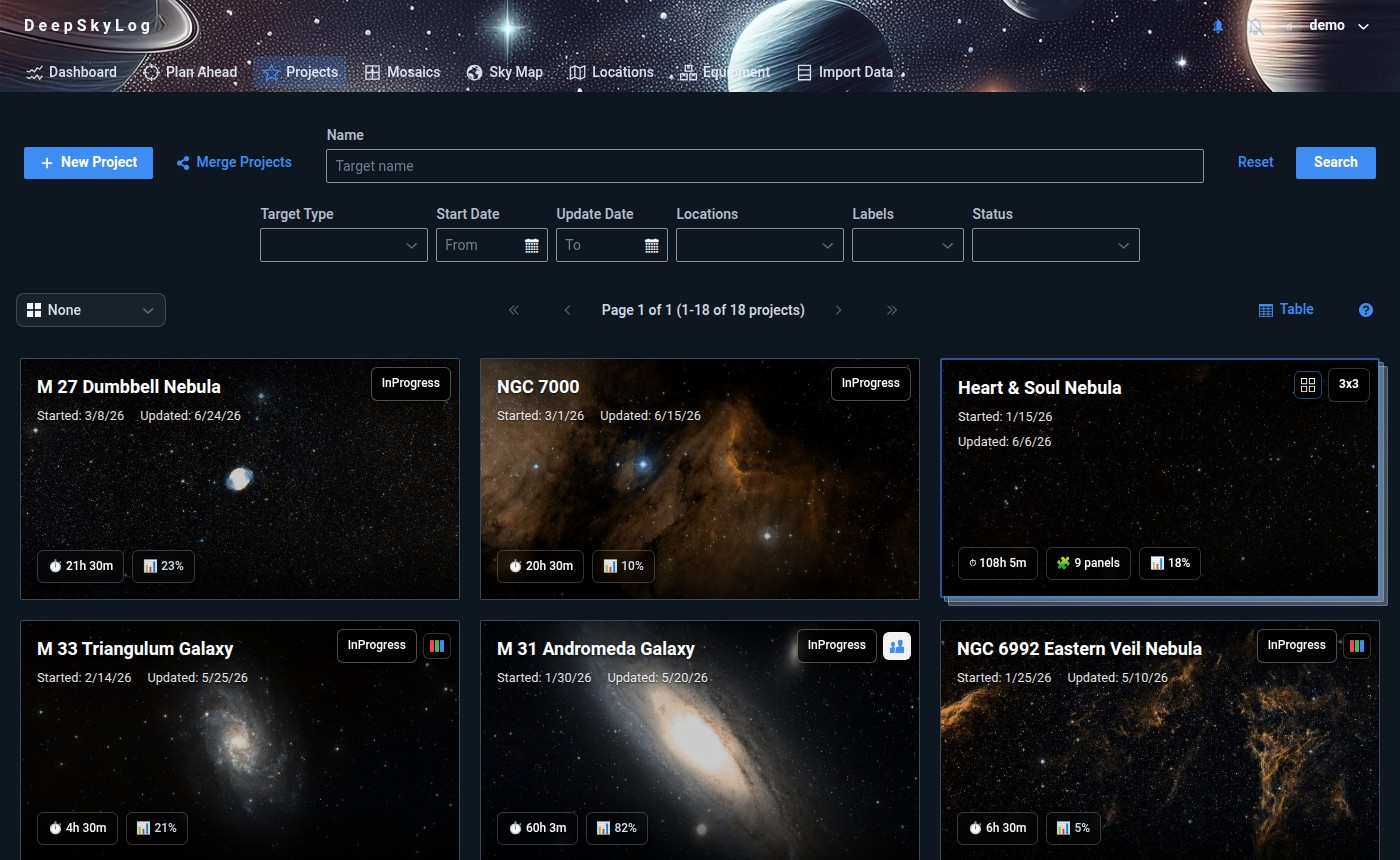
A project's integration total and filter breakdown above its planning windows and the moon phase for the season. Full-size image
An example from the application
Four panels. Not quite the same amount of sky time.
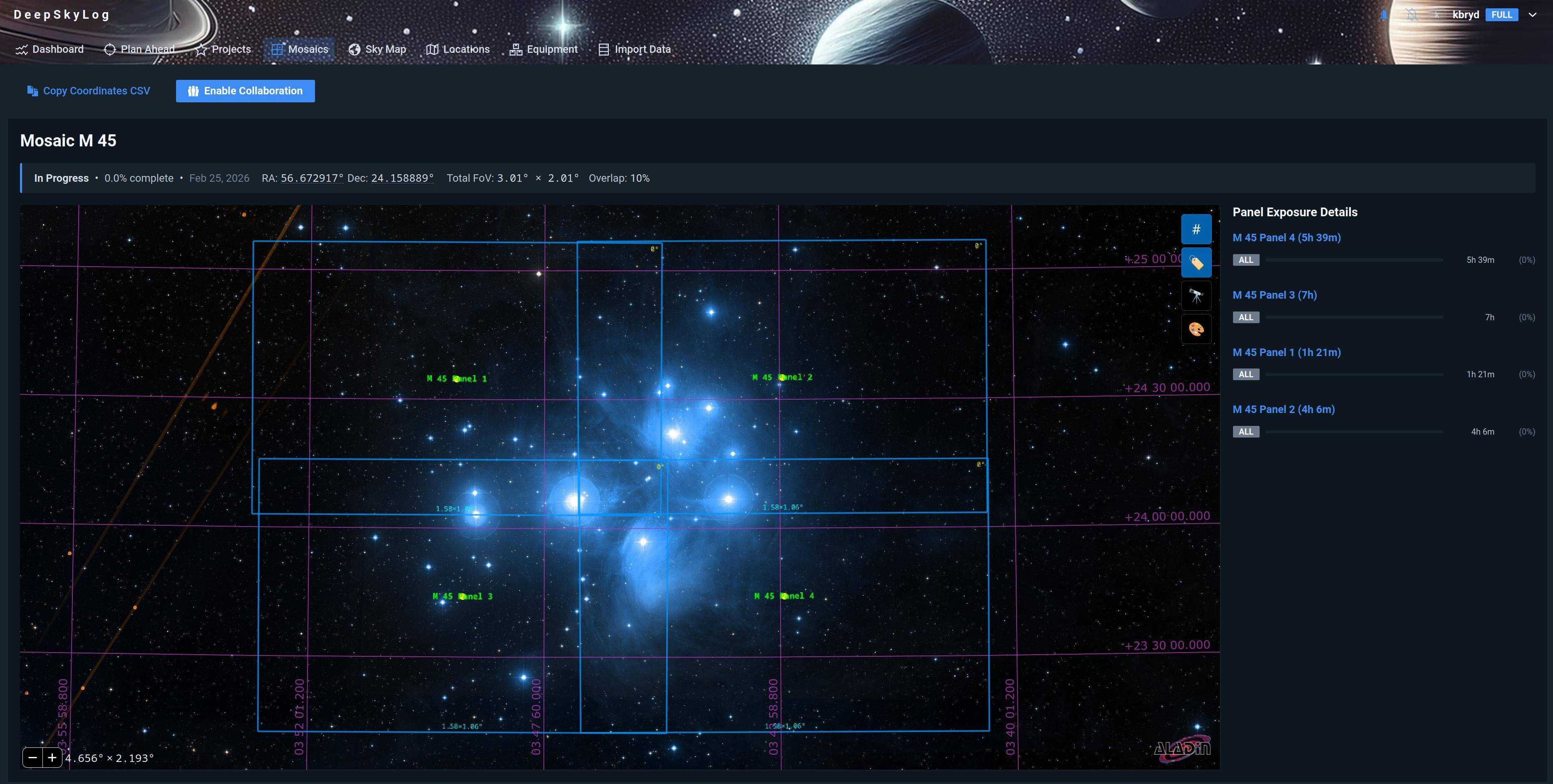
The M 45 mosaic below covers the target, but the panels have very different exposure totals. That is useful planning information, not just a record of past sessions.
M 45 in the sky map with the panel exposure totals on the right. Open the image to inspect the panel footprints and their integration.
Where would you spend the next clear hour?
M 45 Panel 1
8 h 45 m
M 45 Panel 2
11 h 06 m
M 45 Panel 3
7 h 24 m
M 45 Panel 4
11 h 06 m
If you're aiming for similar depth across the mosaic, M 45 Panel 3 at just over 7 hours is the obvious place to look first. Check its filter totals and data quality, then use the target's imaging window and your site's forecast to plan another sequence.
Plan your next session with your whole collection in view.
DeepSkyLog connects planning with what you have already captured. Bring in your existing FITS collection, track new captures through NINA, and use that history to decide which targets, filters, or mosaic panels need more time.
Check imaging windows and weather forecasts for your observing locations, manage mosaics, and coordinate shared projects with other astrophotographers. Your plans, captured-frame metadata, and progress stay connected rather than becoming separate records you have to reconcile.
Telescopius
Target discovery, imaging plans and framing, alongside a personal image gallery.
DeepSkyLog
Planning and managing ongoing imaging projects, connecting your existing FITS collection and NINA captures with integration goals, location-specific weather, mosaics, and collaboration.
AstroBin
Publishing finished images, documenting results, and sharing them with the astrophotography community.
These are broad areas of focus, not exclusive feature lists. The tools have overlapping capabilities.
If you want to plan around the data you already have, not just the target you want to photograph, that is where DeepSkyLog stands out.
Getting useful results
Start small. Then bring in the rest.
Import one night
Choose files from one equipment setup and location. Check the target names and filters before importing the wider collection.
Give a project a goal
Pick something unfinished and set the integration time you want for each filter. Now the totals have some context.
Plan the next night
Compare what's missing with target visibility and your site's forecast. After capturing, review the new data and use the updated totals to plan the following session.
I’m Karol, the developer of DeepSkyLog. I am an amateur astrophotographer, or more like an astro-hoarder, as I capture more than I process :-) This is why I created DeepSkyLog - previously known as astrohoarder.space - to track what I have captured so far.
If a part of your imaging workflow doesn’t fit, or an import doesn’t make sense, I’d like to hear about it.
Tell me which capture software you use and how you decide what to capture next, or simply if something just does not work. A concrete example of what gets in the way helps me understand what needs to change.
Yes. Use target imaging windows, weather forecasts for your locations, filter goals, and mosaic coverage to plan what to capture. Your imported collection and new NINA captures give those plans context, while shared projects let you coordinate contributions with other imagers. Explore project planning.
Do I need NINA?
No. Batch-import an existing FITS collection with the CLI or Windows app. Files from AsiAir, KStars / Ekos, Voyager, and other acquisition tools can be imported this way. This is FITS import, not a native integration with each application. Choose an importer.
Are my original images uploaded?
No. The import tools send metadata, while the original FITS files stay on your storage. Keep your own backups; DeepSkyLog does not replace them.
Can I try it before importing everything?
Yes. Explore the demo, or create an account and start with one night. A free trial unlocks every feature within its frame and project limits. Web imports are free; CLI, Windows app, and NINA uploads are paid. See pricing and limits.